
unexpected relationships edition
plus fish necks, bear butter, and woodcocks vs. deer
Hello and welcome to What’s New in Animals and Plants — the newsletter where we learn a little bit about what plants and animals are up to.
This news is often surprising. Sometimes, it might even overturn cherished beliefs. For instance:
This week’s theme is unusual animal entanglements. Science builds knowledge a bit at a time, and many studies focus on just one species. In reality, different animals live shoulder to shoulder1 as friends, neighbors, rivals, colleagues, the eater/the eaten, etc. So we’ll explore some of these relationships today.
WHAT’S NEW
woodcock smackdown
from: Brunette, K.L., et al. Oh deer! Videography reveals a range of defensive behaviors against a cervid by a ground-nesting bird. The Scientific Naturalist 107, 6 (2026). https://esajournals.onlinelibrary.wiley.com/doi/10.1002/ecy.70448
American woodcocks have many claims to fame: they dance, they peent, they entertain thousands in New York City. As Robert Francis points out, they’re maybe the only US bird that has held onto a rolodex of cool nicknames. People still call woodcocks “timberdoodles,” “bog-suckers,” and “Labrador twisters.”
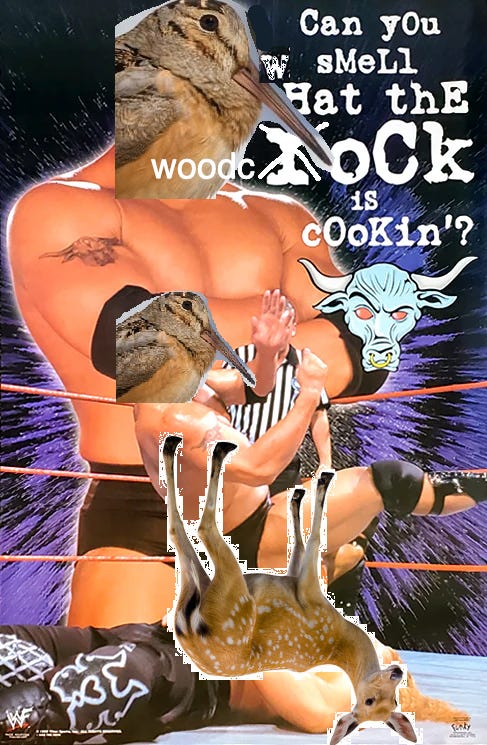
We should start calling them “deer-wreckers”:
Camera traps set out by the American Woodcock Research Cooperative filmed this female woodcock protecting her nest from a curious deer (deer will opportunistically eat bird eggs).
The deer sniffs at the woodcock’s head and is knocked back by a flurry of defensive action: flapping wings, unearthly screeches, and a joust with the big beak.
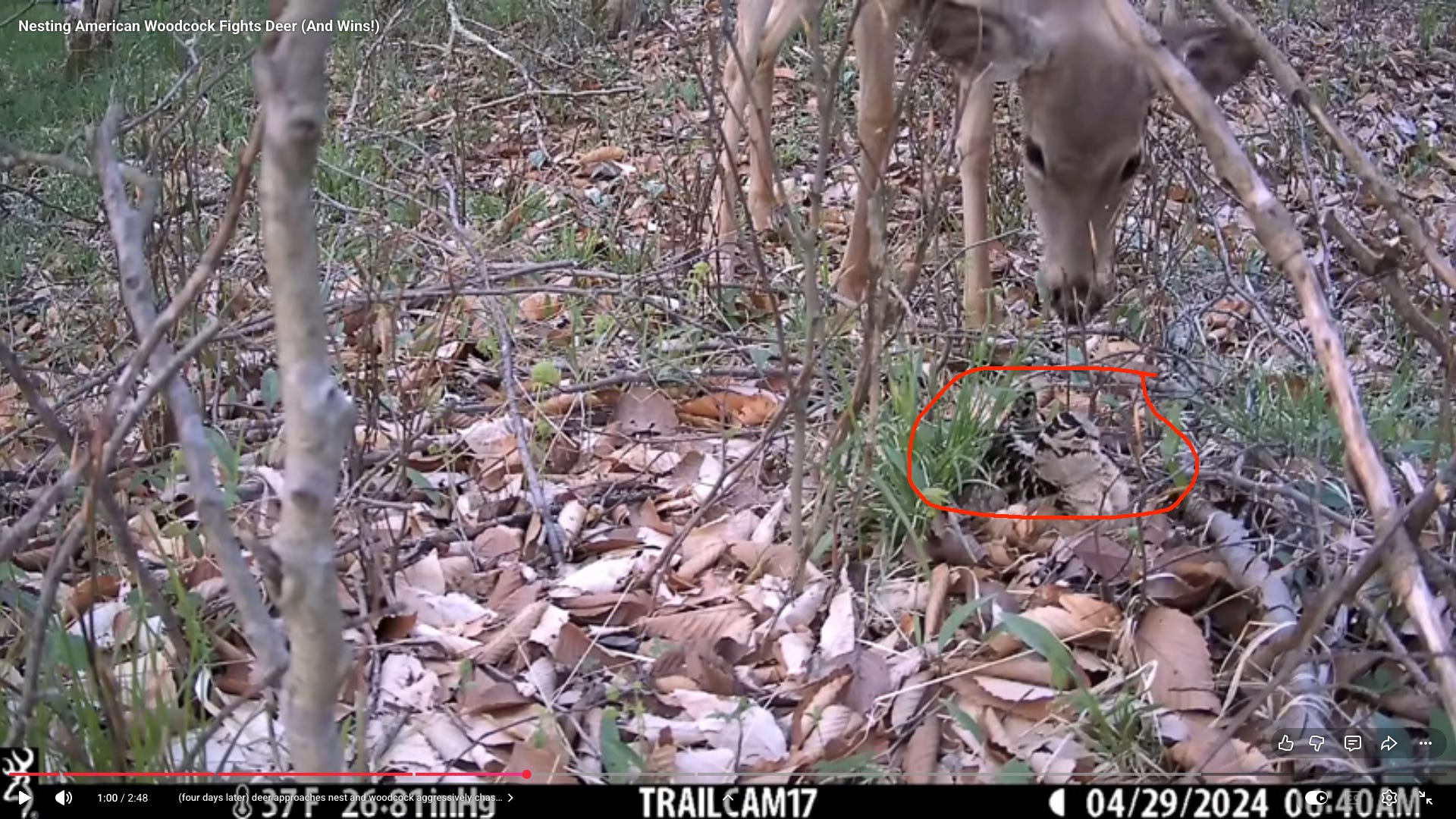
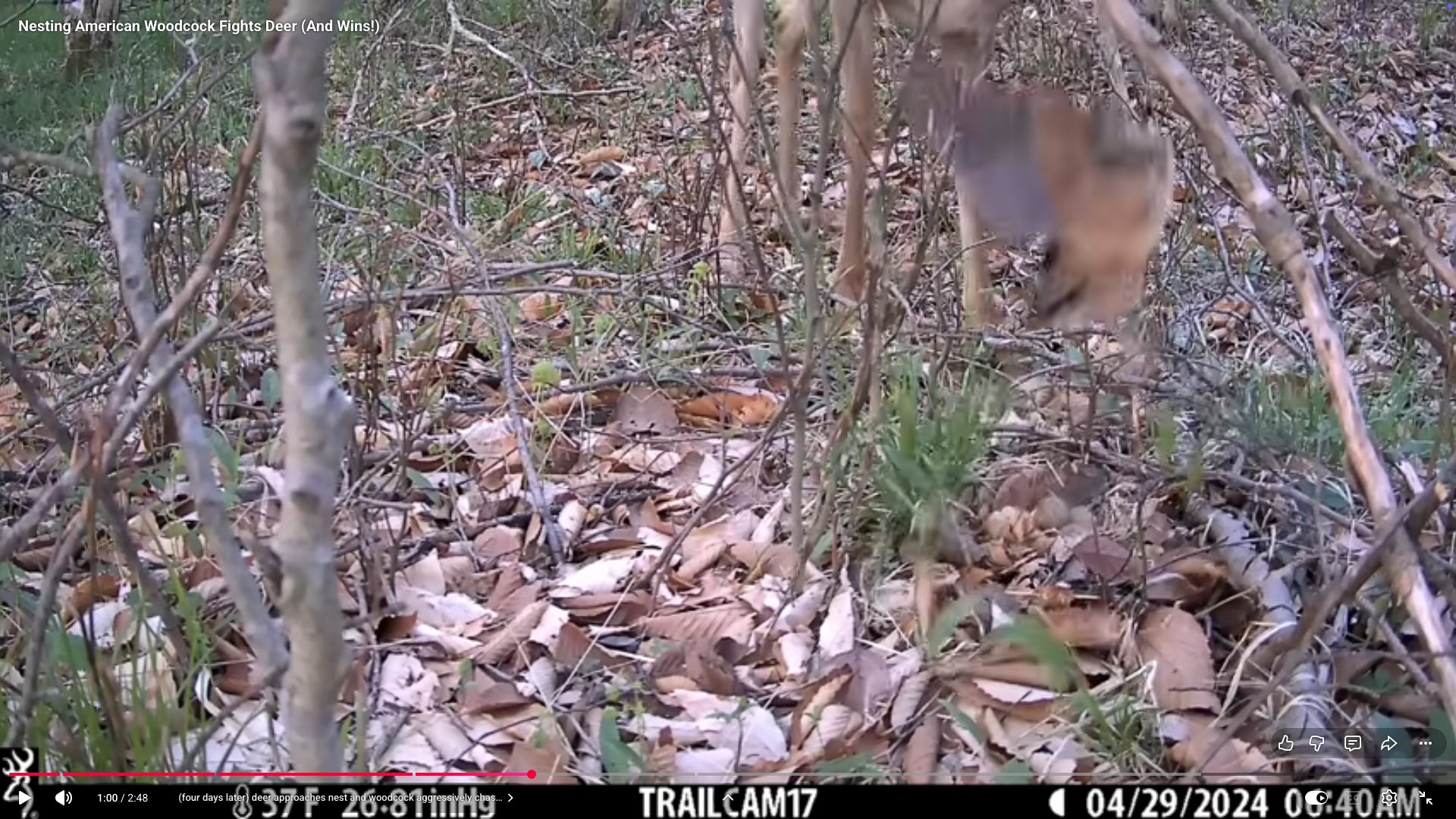
The deer returns four days later and it’s the same. Total annihilation. Victory for birdkind. The deer gives it one more try… but the woodcock only has to puff up and croak a bit, and she shrinks off again.
This little drama must play out over and over again in our magnificent and mysterious forests.
all I want for Christmas is worm
Why are coral reefs such lively and biodiverse habitats? One big reason is their abundance of mutualisms: win-win relationships between two different species.
Some of Earth’s best-known mutualisms are found in coral reefs, where clownfish nestle in anemones and cleaner shrimp dart between the teeth of larger, scarier fish. Even the reefs themselves are alliances, between structurally rigid coral polyps and the photosynthetic algae that live inside.
A new paper details a previously unknown relationship taking place on coral reefs: one between neon gobies and Christmas tree worms.
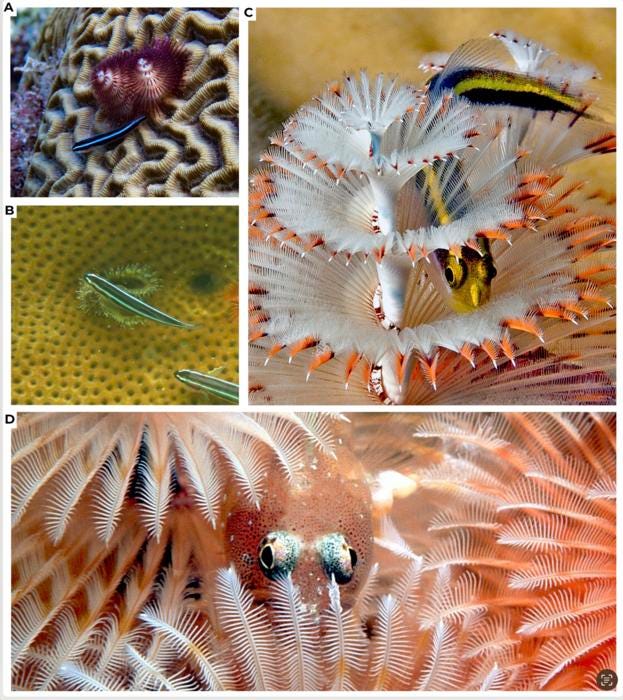
The fish like to wreathe themselves the worms. Normally when these worms are disturbed, they will pull in their feathery appendages. But:
…these fishes perched on or within the extended worm radioles without eliciting a withdrawal response, and frequently displayed “tailing” behavior in which their tails remained in contact with the radioles.
The research team observed goby-worm diva collaborations in Papua New Guinea and the Caribbean, and in archival photographs from Bonaire. They don’t know what’s going on (or if this is a mutualism at all). But you and I are in a mutualistic relationship, dear reader, and I will keep you posted as we learn more.
bear butter
from: Erik Peterson, John S. Waller, Don White, Jr., James R. Pierce, Daniel H. Thornton. “Broad-scale models of a foundational alpine insect: Implications for grizzly bear ecology and conservation.” Biological Conservation, Volume 320 (2026). https://doi.org/10.1016/j.biocon.2026.111892.
Scientists have figured out exactly where grizzlies find one of their favorite snacks: army cutworm moths.
These moths spend their lives in two iconic American landscapes. They hatch as caterpillars in the Great Plains, transform, and then wing up into the Rocky Mountains, where they live together in the shady talus fields and feed on alpine flowers.
The grizzlies find them there and eat them by the tens of thousands, relishing the fat and protein. Moth-slurping is one of their main activities between July and September. Researchers call the moths “bear butter.”
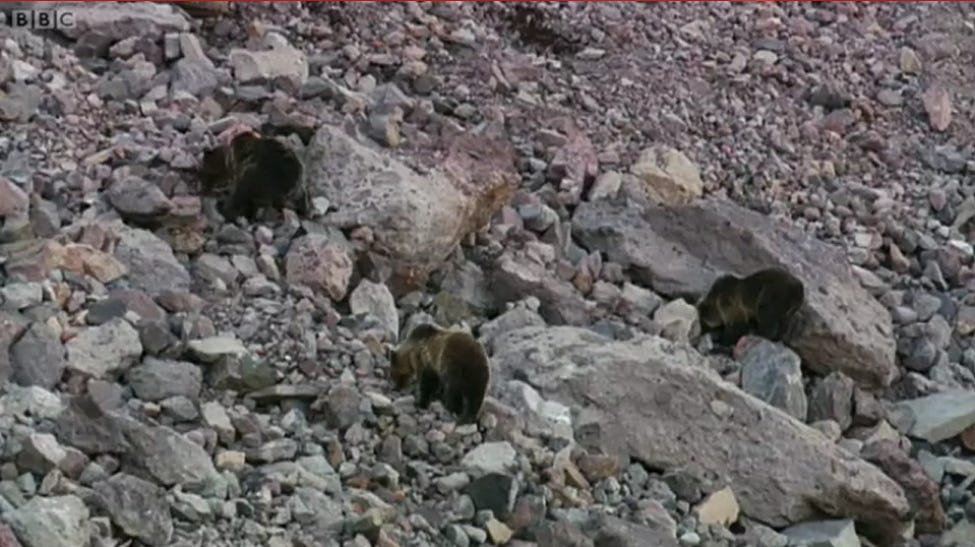
The study focused on Glacier National Park, and mapped the precise areas in the park where the moths are found. Its authors hope knowing where this interaction occurs will protect the moth homesteads/bear larders from human disturbance. Hikers—whatever you do, don’t get between a bear and his butter.
FINAL THOUGHT
For National Geographic last week, I covered new research that found that giraffes can combine quantities in their minds (a kind of mental math). It was a really fun study to cover. My favorite part was watching this video of Nuru—the most numerically gifted giraffe—pay very close attention during her test:
Video: Loidi et al., 2026 / Universitat de Barcelona / Zoo Barcelona
I think Nuru could beat me in chess. *Carl Kasell voice* and if that happens… you’ll learn about it here… on What’s New in Animals and Plants!
Are you a subscriber with a thought or question? An editor who would like me to cover one of these things in more depth? An animal or plant with news to report? Write me: caragiaimo@gmail.com
Thank you for reading!
1. Think that fishes and amphibians don’t have shoulders? Think again… (actually I’m not sure about this).
p.s. if you want to know about the fish necks: https://phys.org/news/2026-07-fishes-amphibians-dont-necks.html